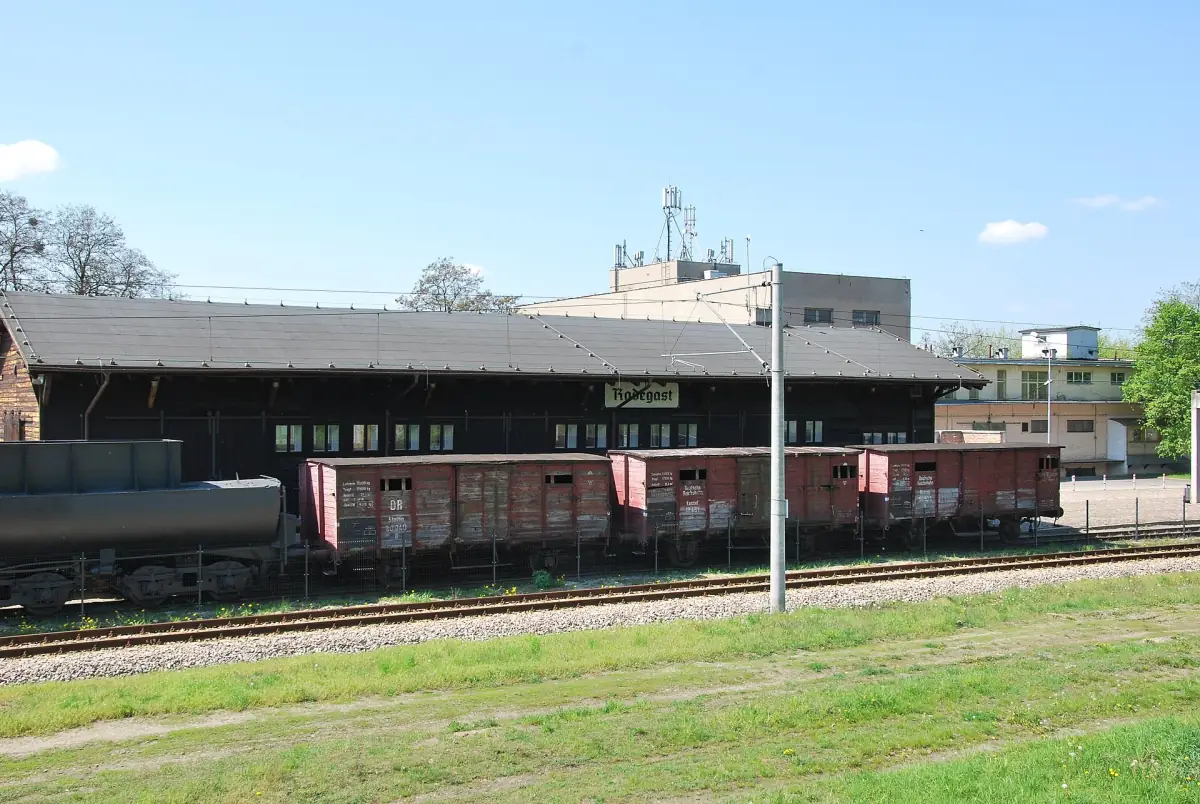

The Łódź Ghetto and Radegast station
Litzmannstadt was the name the German occupiers gave to the city of Łódź. The Łódź Ghetto is closely tied to the German extermination camp Kulmhof in Chełmno nad Nerem: according to the United States Holocaust Memorial Museum (USHMM), the people murdered there were above all Jews from the Warthegau and from this ghetto.
Radegast station was the place from which transports from the ghetto left. The station building dates from 1941. A memorial ensemble has stood at the station since 2004. Today Radegast station is a branch of a museum in Łódź, at Aleja Pamięci Ofiar Litzmannstadt Getto 12.


Deportations from the Łódź Ghetto
The destinations of the deportations changed over time. Not every transport from Radegast went to Kulmhof.
1941: the station building
The building of Radegast station dates from 1941. It is the historic part of the memorial site today, alongside the memorial ensemble of 2004.
December 1941: Kulmhof begins operating
The first transport reached the extermination camp Kulmhof on 7 December 1941. The killings began on 8 December 1941. German perpetrators murdered the victims in gas vans with carbon monoxide from the engine exhaust.
From 16 January 1942: from Radegast to Kulmhof
The Kulmhof memorial describes transports from Radegast station via Kutno to Koło, and from there onward to Kulmhof, from 16 January 1942. The USHMM documents deportations from Łódź to Kulmhof during 1942.
April 1943: the end of the first phase
The first phase of Kulmhof lasted from December 1941 to April 1943. The palace in the village of Chełmno nad Nerem was blown up on 7 April 1943.
June and July 1944: Kulmhof again
The second phase of Kulmhof began in June 1944. According to the USHMM, Jews from Łódź were deported to Kulmhof again in June and July 1944. The killings now took place mainly in the forest camp in the Rzuchów forest.
August 1944: deportations to Auschwitz-Birkenau
In August 1944, the remaining inhabitants of the ghetto were deported, most of them to Auschwitz-Birkenau, according to the USHMM.
2004: the memorial at the station
Since 2004, a memorial ensemble has stood at Radegast station. Together with the historic station building of 1941, it forms the place of remembrance that visitors see today.
From Radegast to Kulmhof
The route that the Kulmhof memorial describes ran from Radegast station via Kutno to Koło. From Koło, the deported people were taken on to Kulmhof in the village of Chełmno nad Nerem. These transports began on 16 January 1942. At Kulmhof, German perpetrators murdered them in gas vans.
According to the USHMM, the victims of Kulmhof included Jews who had first been deported to Łódź from other European countries. The USHMM gives at least 152,000 Jewish victims of Kulmhof and at least 156,300 victims in total, and states that the exact total is unknown. The memorial at Kulmhof considers a total of about 200,000 probable. The page on the history of Kulmhof sets out these figures, the two phases of the camp and the trials after the war.
Kulmhof was not the only destination. In August 1944, most of the remaining people in the ghetto were deported to Auschwitz-Birkenau. When you read about a transport from Radegast, check which destination and which year it refers to.

Visiting Radegast station today
Radegast station is run as its own branch by a museum in Łódź, at Aleja Pamięci Ofiar Litzmannstadt Getto 12. Its operator is different from the memorial in Chełmno nad Nerem. The museum lists Radegast and Radogoszcz as separate branches; they are two different places.
Opening hours and admission can change. Admission may be charged. Check the current opening hours, prices and any free days with the museum before your visit, and check the current public transport connections in Łódź as well.
The station is a place of remembrance for the people deported from the ghetto. Please behave there as you would at a memorial: quietly, and with respect for other visitors.
Radegast and Kulmhof: two places of remembrance
The memorial at Kulmhof names regular buses from Łódź and from Koło to Chełmno nad Nerem. Timetables change, so check the current timetable before you travel. The village area of the Kulmhof memorial is open Tuesday to Sunday from 9 a.m. to 3 p.m., with last entry at 2:30 p.m., and admission is free. The forest area in the Rzuchów forest is open to visitors. Guided tours, the audio guide and the rules on site are described on the page about visiting the Kulmhof memorial.
The two places have different operators, and their opening hours differ. Kulmhof is closed on Mondays and on several public holidays, so plan the days of your visits with both sets of opening hours in mind.
The town of Chełmno on the Vistula shares its name with the village but is a different place. Travel to that town is explained on the page about getting to Chełmno on the Vistula.
Continue reading

Visiting the Kulmhof memorial
Opening hours, free admission, guided tours and conduct on site.

The history of Kulmhof
The two phases from 1941 to 1945, the victims, the figures and the trials.
Photos – Visiting the Kulmhof memorial: Detail of a photo by PaulinaŻabikowo · CC BY-SA 4.0; The history of Kulmhof: Chełmno - Pomnik 02 · Detail of a photo by Lestat (Jan Mehlich) · CC BY-SA 3.0


Guided visits to Radegast and the former ghetto
Private guided visits that include Radegast station and the former ghetto: from Łódź, or from Warsaw for a full day. Before booking, ask the provider whether admission is included and whether the guide may lead your group inside the memorial.
Hand-picked tours, booked through GetYourGuide. Prices are indicative starting prices in euros (as of October 2026). Tap a tour for live availability and the current price in your currency.
Jewish history visit with the cemetery and Radegast station
- Radegast station ticket
- Jewish cemetery ticket
- Hotel pickup and return
A private guided visit with about an hour at Radegast station and a stop at the former ghetto. The provider does not recommend it for children under 13.
Check availability →Full-day visit to the Litzmannstadt ghetto and Radegast from Warsaw
- Private local guide
- Admission fees included
- Pickup and return from Warsaw
A full-day private trip from Warsaw to the Łódź ghetto area and Radegast station, with admission fees covered. Agree the pickup point with the provider when you book.
Check availability →
Visit to Radegast station and the former ghetto from Łódź
- Guide and transport
- Hotel pickup and return
A private visit to the former ghetto area, Radegast station, the Jewish cemetery and the Survivors' Park. Admission fees are paid separately.
Check availability →Photos – Jewish history visit with the cemetery and R…: Detail of a photo by M Z Wojalski wolno używać pod warunkiem podania imienia i nazwiska autora · CC BY-SA 4.0; Visit to Radegast station and the former ghe…: Detail of a photo by Zorro2212 · CC BY-SA 4.0
Guided visits to Radegast and the former ghetto
Private guided visits from Łódź and Warsaw that include Radegast station and the former ghetto. Before booking, ask the provider whether admission is included and whether the guide may lead your group inside the memorial.
The Łódź Ghetto and Radegast: frequently asked questions
What was Litzmannstadt?
Litzmannstadt was the name the German occupiers gave to the city of Łódź. The Łódź Ghetto is also known by this name.
Where were the people from the Łódź Ghetto deported?
According to the USHMM, to the extermination camp Kulmhof in 1942 and again in June and July 1944. In August 1944, most of the remaining inhabitants were deported to Auschwitz-Birkenau.
How did the transports reach Kulmhof?
The Kulmhof memorial describes transports from Radegast station via Kutno to Koło, and from there onward to Kulmhof, from 16 January 1942.
Where is Radegast station?
At Aleja Pamięci Ofiar Litzmannstadt Getto 12 in Łódź. It is a branch of a museum in Łódź.
Is admission to Radegast station free?
Admission may be charged. Check the current prices, free days and opening hours with the museum before your visit.
Is this the official website of the memorial?
No. This is an independent visitor guide. For binding information, please contact the museums directly.