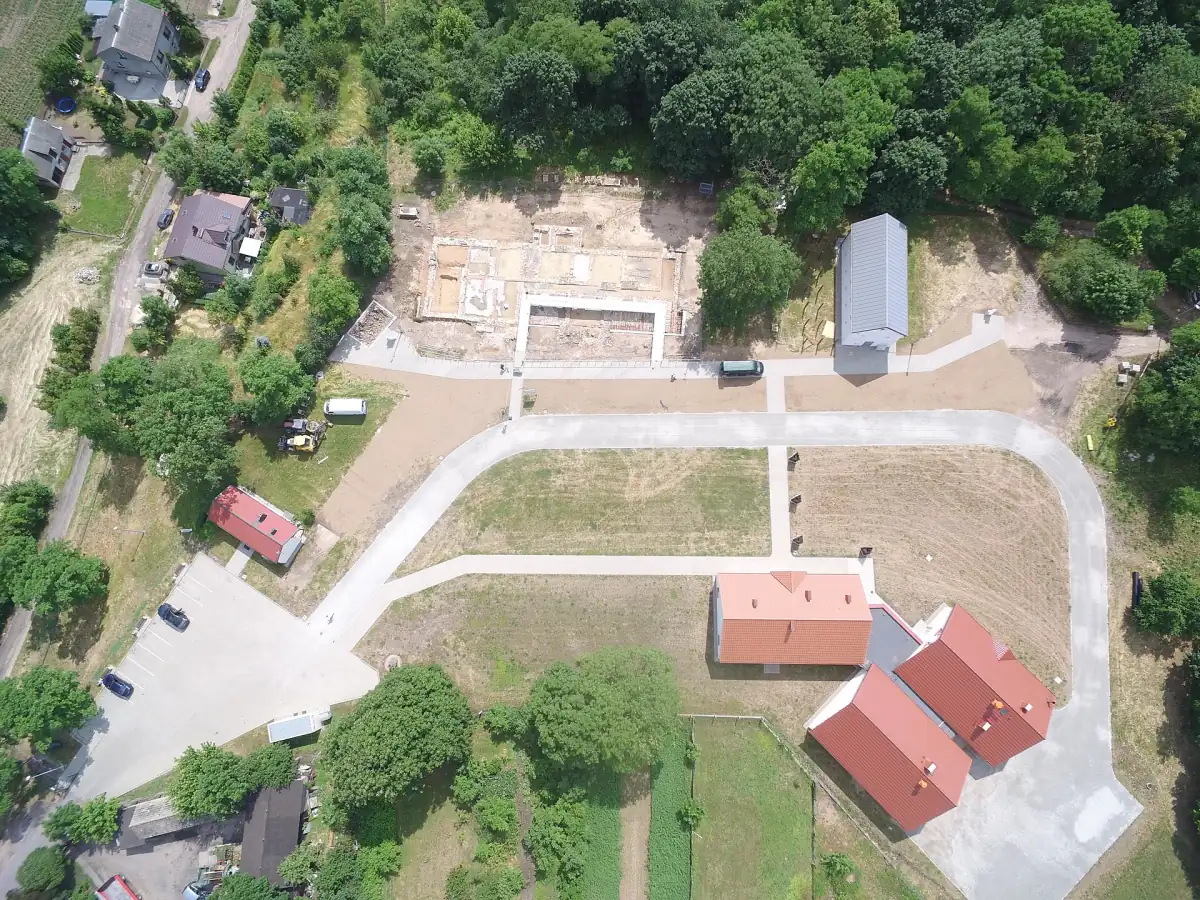

The Chełmno extermination camp and the memorial today
The German extermination camp Kulmhof operated in occupied Poland, in the village of Chełmno nad Nerem in the Greater Poland region. It is a different place from the town of Chełmno on the Vistula, which most of this guide describes. The first transport arrived on 7 December 1941, and the killings began the following day. German perpetrators murdered the victims in gas vans, using carbon monoxide from the engine exhaust. The camp operated in two phases: from December 1941 to April 1943 and from June 1944 to January 1945.
Today the site is a memorial museum, the Muzeum byłego niemieckiego Obozu Zagłady Kulmhof w Chełmnie nad Nerem (Museum of the Former German Extermination Camp Kulmhof). It is a branch of the Muzeum Martyrologiczne w Żabikowie. The address is Chełmno 59A, 62-660 Dąbie.


Opening hours, admission and guided tours
Admission is free. Guided tours and the audio guide are paid services. Prices as of 2026.
| Topic | Details |
|---|---|
| Village area | Tuesday to Sunday 9 a.m. to 3 p.m., last entry 2:30 p.m.; closed on Mondays |
| Forest area | Open to visitors; this does not mean that every building there is open at all times |
| Closing days | 1 and 6 January, Easter, Pentecost Sunday, 1 and 3 May, Corpus Christi, 15 August, 1 and 11 November, 25 and 26 December |
| 24 and 31 December | Open until 1 p.m. |
| Admission | Free for individual visitors and groups, for the grounds and the exhibition |
| Guided tour in Polish | PLN 40 for one person, PLN 300 for an organized group of more than 5 people, PLN 200 for a school group |
| Guided tour in English | PLN 50 for one person, PLN 400 for a group of more than 5 people |
| Audio guide | PLN 20, as a device or a browser app, in Polish, English and German |
| Groups with their own guide | PLN 10 per person for up to 10 people, PLN 100 per group above that |
A guided tour for a single visitor covers the village area only. The audio guide is handed out or activated at the visitor point in the village. It is also available with audio description in Polish and in Polish Sign Language. The fee for groups that bring their own guide is a charge for that service, not an admission fee.
Guided tours are arranged directly with the memorial. Its visitor regulations, dated April 2022, ask for tours to be booked at least three days in advance, and guides from outside the museum need the museum's permission. Check the current conditions with the memorial before you book.
The two areas of the site
The crimes took place at two locations about 4 km apart: in the village and in the Rzuchów forest. Not every part of the camp survives as a building. Please treat every part of the grounds as a place of mourning.
The village and the former palace grounds
The village with the palace was one of the two crime sites. The palace was blown up on 7 April 1943. There is no preserved palace that visitors can walk through today; the former palace and manor grounds form part of the memorial. The museum took over this area of the village in 1998.
The granary
An exhibition opened in the restored granary in 2009. The last killings at Kulmhof took place at the granary in the night of 17 to 18 January 1945. One part of the exhibition is devoted to the granary as a site of the tragedy.
The permanent exhibition
The historical permanent exhibition opened on 18 December 2019. Its Polish title is To są ostatnie dni naszego życia, dajemy więc znać o sobie, which means: these are the last days of our lives, so we are letting you know about ourselves.
The forest camp in the Rzuchów forest
About 4 km from the village lies the Rzuchów forest, Las Rzuchowski in Polish. In the second phase of the camp, from June 1944 to January 1945, the killings took place mainly in the forest camp. The forest grounds with their memorials are open to visitors. Opening times of individual buildings there can differ from those of the open grounds.


Getting to Chełmno nad Nerem
According to the memorial, regular buses run to Chełmno nad Nerem from Koło and from Łódź. By car, the memorial names the Dąbie exit of the A2 motorway, or road 92 with the Koło exit towards Dąbie and Uniejów. Bus lines, timetables and fares change, so check the current timetable before you go. Motor vehicles are not allowed on the museum grounds.
Chełmno nad Nerem is not the town of Chełmno on the Vistula with its walled old town. Travel to that town is explained on the page about getting to Chełmno on the Vistula. Many victims of Kulmhof were deported from the Łódź Ghetto; the page on the Łódź Ghetto and Radegast station follows their route.
Conduct on the grounds
The visitor regulations of the memorial, dated April 2022, set out these rules among others:
- Behave and dress with dignity.
- Do not smoke or light an open fire. Candles may be placed only where the memorial provides for them.
- Do not eat on the grounds, and do not touch the exhibits.
- Do not use mobile phones in the exhibition rooms and historic buildings.
- Animals are not allowed, with the exception of assistance dogs.
- Drones may be flown only with the museum's consent.
- Private photos are allowed free of charge. Publishing them or using them commercially needs separate consent from the museum.
Motor vehicles are not allowed anywhere on the museum grounds.
Children and preparing for the visit
Age. The visitor regulations do not recommend a visit for children under 12. Younger school children should come only with adults. This is a recommendation of the memorial, not a legal minimum age.
Before you go. It can help to read about the history of the camp before the visit. The page on the history of Kulmhof sets out the two phases, the groups of victims, the figures given by the memorial and the USHMM, and the trials after the war.
On site. If you visit on your own, the audio guide in Polish, English or German accompanies the visit. It is handed out at the visitor point in the village, which is also where a guided tour for a single visitor takes place.
Continue reading

The history of Kulmhof
The two phases from 1941 to 1945, the victims, the figures and the trials.

The Łódź Ghetto and Radegast station
Deportations from Litzmannstadt to Kulmhof and the memorial at the station.
Photos – The history of Kulmhof: Chełmno - Pomnik 02 · Detail of a photo by Lestat (Jan Mehlich) · CC BY-SA 3.0

Visiting the Kulmhof memorial: frequently asked questions
When is the Kulmhof memorial open?
The village area is open Tuesday to Sunday from 9 a.m. to 3 p.m., last entry 2:30 p.m. It is closed on Mondays and on the listed holidays. The forest area is open to visitors.
Is admission free?
Yes. Admission to the grounds and the exhibition is free for individual visitors and groups. Guided tours cost PLN 40 in Polish and PLN 50 in English for one person, and the audio guide costs PLN 20 (as of 2026).
How do I book a guided tour?
Directly with the memorial. Its visitor regulations of April 2022 ask for at least three days' notice. A guided tour for a single visitor covers the village area only.
Was the camp in the town of Chełmno on the Vistula?
No. Kulmhof was in the village of Chełmno nad Nerem in Greater Poland. The town of Chełmno on the Vistula is a different place.
Who runs the memorial?
The memorial is a branch of the Muzeum Martyrologiczne w Żabikowie.
Is this the official website of the memorial?
No. This is an independent visitor guide. For binding information, please contact the memorial directly.